
2025 Wasn’t a Leadership Test. It Was a Pressure Test. And We Felt It in Every Room.

If 2024 was the warm-up, 2025 hit like a wall of white water.
We watched leaders across Australia walk into a year shaped by the same global forces everyone else was talking about - AI acceleration, shifting hybrid expectations, tightening talent markets. But the real story wasn’t the technology. It wasn’t hybrid. It wasn’t even burnout.
It was volume. Too much, too fast, with too little buffer.
And it showed up in very human ways.

Executives who were steady last year suddenly felt scattered. Newly promoted leaders were drowning before they’d even learned to lead. Teams who cared deeply were exhausted from being “on” all the time.
Not because they weren’t capable, but because the pace is now bigger than human scale.
This year confirmed something I’ve been saying for a long time: Leaders weren’t built for this speed. The system has outpaced the people inside it.
Not because they’re underqualified, or fragile, or even resistant. Because the expectations of the leadership role exploded while the structures holding them steady stayed the same.

The Australian Pattern We Saw Again and Again
Across mining, health, science, tech, precinct management, ports, and education, the themes were identical:
Leaders are holding too much. They’re expected to absorb organisational instability, emotional labour, constant change, interpersonal tension, wellbeing, performance, culture, and tech transitions - all while doing their “actual job”.
Hybrid isn’t hybrid. Most teams still operate in an informal mix of remote, onsite and ad hoc, and leaders are left to make sense of it without a playbook.
AI created efficiency, AND more cognitive load. Tools sped up reporting, forecasting and admin - but leaders had to become the interpreter, coach, and buffer for digital anxiety and capability gaps.
Emotional labour peaked. Australians don’t tend to talk about pressure until they’re past breaking point. Leaders see it but often don’t know what to do with it.
Strategy and execution drifted apart. Brilliant plans at the top rarely made it to the frontline intact. Teams filled the gaps with assumptions, and leaders felt the weight of constant recalibration.
And the one that concerns me most:
The people supporting everyone else were running on empty.
HR, People & Culture, frontline supervisors, middle managers - the group holding the emotional scaffolding of our workplaces - were the most depleted of all.
This wasn’t a crisis of capability. It was a crisis of capacity.
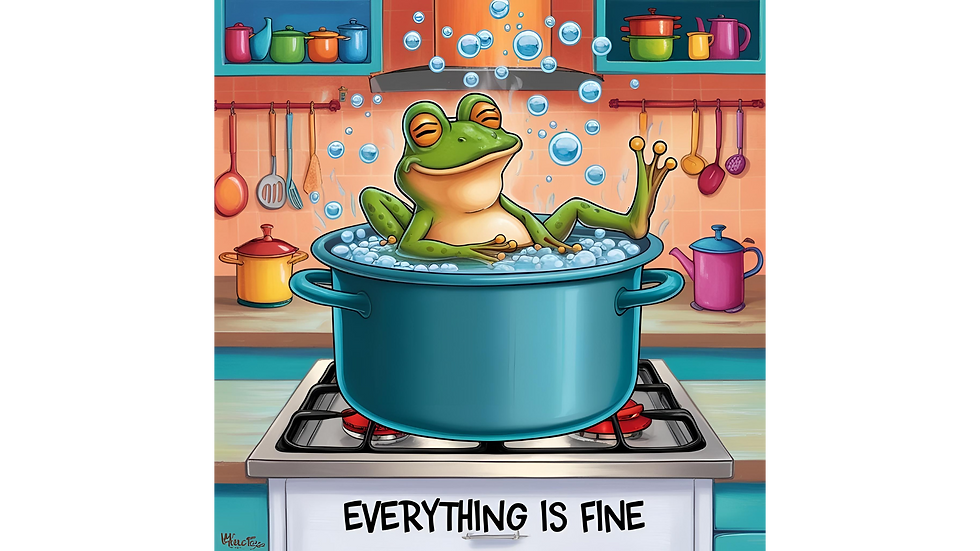
I need you to know this!
You aren’t meant to hold this alone.
You aren’t meant to have all the answers.
And you aren’t failing - the pace is unsustainable without a system.
This is why at Well-Led Workplaces, we doubled down on something simple, human and mechanical:
Leadership shouldn't rely on personality, it needs backing with mechanisms.
Mechanisms that steady the room when emotions run high. Mechanisms that turn confusion into clarity. Mechanisms that stop drift before it becomes burnout. Mechanisms that help people say the hard thing early, not after the damage is done.
Because this year made one thing crystal clear: The future belongs to leaders who are ready for anything, not everything.
And that means:
Care that builds connection.
Accountability that creates clarity.
Willingness that activates courage.
The Well-Led System wasn’t a “nice addition” this year. It became a lifeline for leadership.

What 2026 Leadership Needs to Look Like
If 2025 exposed the fragility of the manager role, then 2026 must be the year we rebuild it deliberately.
Not with more training. Not with another wellbeing initiative. Not with slogans.
With systems.
Systems that:
✔ Make drift visible before it becomes damage
✔ Strengthen clarity and communication from the top
✔ Hold leaders steady in the white water
✔ Give teams a shared language so problems don’t get buried
✔ Make accountability supportive, not scary
✔ Create the buffer the world has taken away
Because leaders are not machines. Teams are not infinite. And the pace of our world isn’t slowing down. But we can steady the people inside it.
My invitation as we close out 2025
If this year stretched you, overwhelmed you, or made you question your capability (and sanity) - you are not alone. You weren’t built to lead at this speed without a system behind you.
The question for 2026 isn’t “How do we go faster?” It’s “How do we lead at a human scale again?”
If you want to explore what readiness looks like for your team… reach out.Not because you need fixing, but because you deserve support that matches the reality you’re leading in.
💬 Let’s Make This Practical
If this sounds like your year, you may need someone to help make sense of this, fast.
Book a quick coaching conversation with Julie to explore what working together could look like - no pressure, no jargon, just a grounded, real-world reset.
👉 Book a call here Let’s talk about what it means to be a well-led leader, not a worn-out one.


Comments